





Listen to this blog
Your clean, digital mortgage files are lying to you.
When the monthly performance dashboard drops and the average turnaround time looks pristine, it is easy to celebrate. But those flawless averages are usually an operational illusion.
The reality?
Straightforward applications sail through your system, pulling down the average and masking a deep-seated crisis. Meanwhile, complex portfolios and exception-heavy files stall quietly in the background, driving up your cost to produce and draining your margins. The real operational threat is not absolute speed. It is hidden pipeline volatility across your loan lifecycle management ecosystem.
Stop tracking averages and look at the performance gap
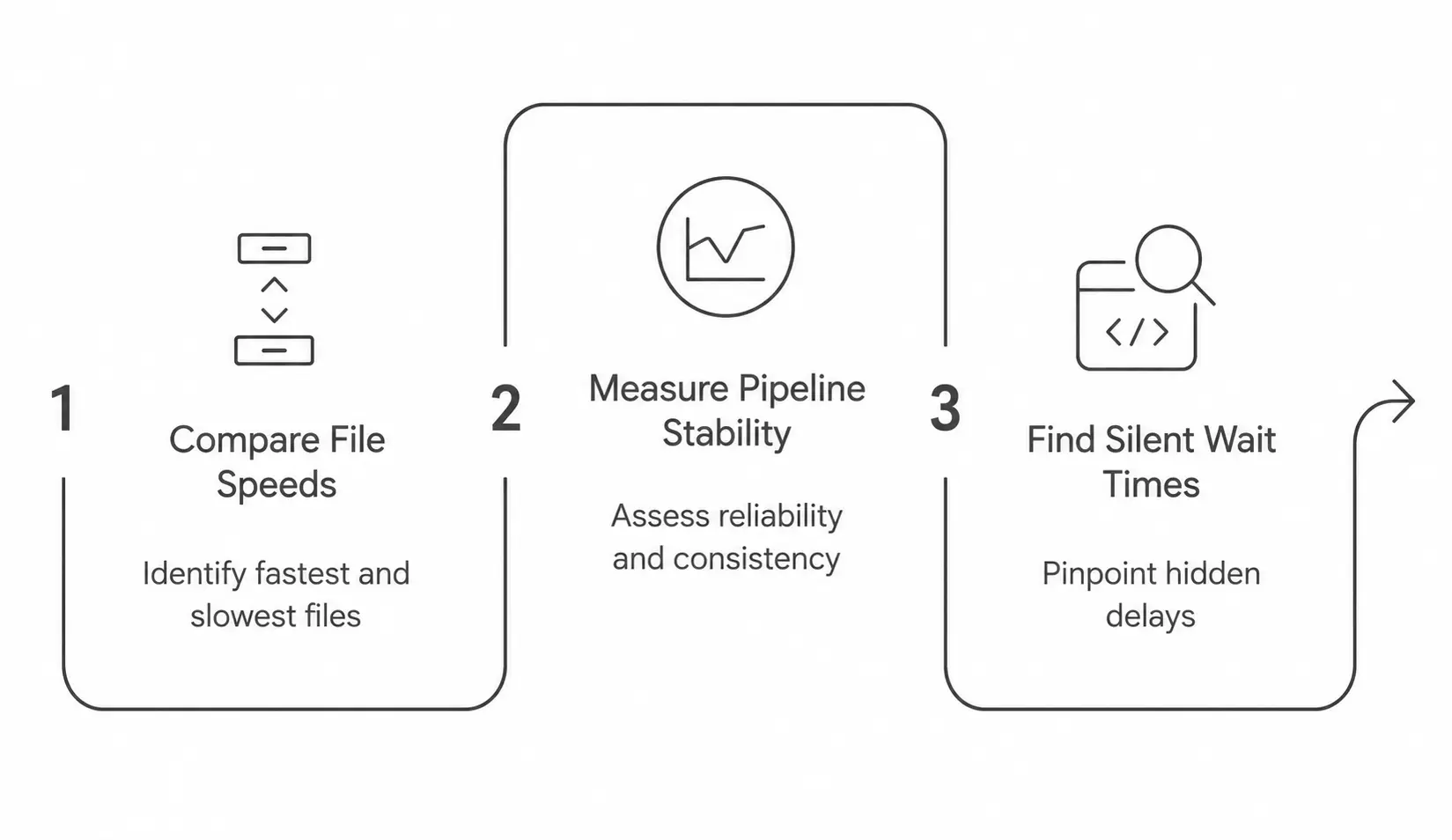
Average turnaround times are comforting metrics that smooth out the exact operational spikes where margin compression occurs.
- Compare your fastest and slowest files: Segment your manufacturing timeline to evaluate the exact delta between the top fifteen percent of accelerated originations and the bottom fifteen percent of delayed files.
- Measure your pipeline stability: A pronounced variance between standard and non-standard manufacturing cycles indicates an unstable workflow dependent on file simplicity rather than process excellence.
- Find the silent wait times: Track the precise duration an asset sits completely untouched in an inbox waiting for manual intervention or specialist exception resolution.
Find exactly where the work slows down
Processing delays are systematic rather than random. When you move beyond macro averages, clear patterns emerge showing exactly where the work grinds to a halt.
- Group your data by loan complexity: Evaluate cycle times relative to specific loan products, compliance tiers, or underwriting criteria to isolate precise points of friction.
- Watch your departmental handoffs: Friction intensifies when an asset moves across functional silos, particularly during the handoff from automated verification tools to manual processing desks.
- Audit your trailing documents: Identify the specific documentation requests that routinely trigger protracted manufacturing delays and repeated borrower follow-up.
Remove the hidden costs of doing the same work twice
Repetitive processing is a primary driver of margin erosion within corporate originations. Every single time a file moves backward in your pipeline, you effectively double the operational expense of that manufacturing phase.
- Count the manual touches: Quantify the exact number of discrete touchpoints and manual modifications executed by disparate operators on a single transaction.
- Spot why files go on hold: Determine which specific missing verifications halt active processing and relegate files to a pending status.
- Fix your front-end data collection: If initial data capture protocols fail to secure comprehensive information, subsequent stages of your loan lifecycle management strategy will suffer from systemic friction.
Build a separate path for complex files
Legacy manufacturing architectures treat exceptions as surprises. Modern enterprise operations anticipate exceptions and engineer parallel pathways to handle them without stopping primary pipeline velocity.
- Separate simple files from exceptions: Implement a high-velocity pathway for automated, low-touch files alongside a specialized architecture for complex portfolios requiring advanced human analysis.
- Give your processors more authority: Equip processing teams with the specialized decisioning tools and parameters necessary to resolve minor file discrepancies instantly.
- Set up automatic delay alerts: Utilize intelligent triggers to alert management the moment an asset exceeds acceptable dwell time thresholds within any single operational status.
Cultivating a predictable operational architecture
Mitigating systemic processing volatility requires more than incremental software upgrades. It demands a comprehensive transformation of how work is routed, managed, and executed across the corporate loan lifecycle management framework.
This is where Visionet delivers strategic differentiation for global financial institutions. Through enterprise-scale mortgage processing services, the operational objective shifts from chasing superficial velocity metrics toward establishing absolute predictability across the entire origination pipeline.
By introducing granular transparency into processing queues and deploying sophisticated exception management frameworks, enterprise leaders can isolate exactly where structural bottlenecks reside. Rather than allowing complex files to stall unnoticed, this methodology provides absolute visibility into operational friction points.
The ultimate objective is an origination ecosystem where every asset moves with identical predictability, regardless of transaction complexity. Stabilizing workflows and eliminating process variance reduces the overall cost to produce while ensuring a consistent, institutional-grade experience for corporate partners, originators, and consumers alike.
True leadership requires the analytical clarity to examine what aggregate metrics obscure, and the operational capability to optimize it.
Advance your operational strategy with VisionetAdvance your operational strategy with Visionet
Ready to move beyond aggregate dashboards and eliminate the hidden bottlenecks constraining your capacity? Discover how our institutional workflows and scalable mortgage processing services can establish absolute predictability across your portfolio.
Review our comprehensive lending and mortgage services to optimize your infrastructure, or contact our enterprise team today to schedule an executive demonstration.
Frequently asked questions (FAQs)
1. Why can average loan turnaround times be misleading?
Average turnaround times often hide delays in complex or exception-heavy loans. Looking beyond averages helps lenders uncover bottlenecks that impact productivity and profitability.
2. How can lenders identify hidden process bottlenecks?
By tracking pipeline stability, comparing fast and slow files, monitoring wait times, and analyzing delays by loan complexity, lenders can pinpoint where work slows down.
3. Why do complex loan files take longer to process?
Complex loans typically require additional documentation, manual reviews, and multiple handoffs between teams, increasing the likelihood of delays.
4. How does better exception management improve mortgage operations?
Separating complex files from standard workflows, automating alerts, and empowering processors to resolve minor issues can reduce delays and keep pipelines moving efficiently.
5. How does Visionet help improve loan processing efficiency?
Visionet helps lenders optimize mortgage operations with streamlined workflows, intelligent exception management, and greater visibility into processing bottlenecks for more predictable loan delivery.
Ready to move from insight to action?
Whether you’re exploring new opportunities, solving operational challenges, or planning your next stage of growth, Visionet can help you move forward with clarity and confidence.
Speak with our experts to explore how we can support your business goals.